TL;DR: AI tools can cut your essay writing time significantly in 2026 — without compromising academic integrity. Use ChatGPT for brainstorming and outlines, Perplexity AI for research with citations, Claude for drafting, and Grammarly for final editing. All of them are free.
Learning how to use AI to write better essays in 2026 is one of the most practical skills any student can develop — and the tools that make it possible are mostly free. Writing essays is still one of the most time-consuming parts of student life, but AI tools have made the process significantly faster and less stressful. The key is knowing how to use them effectively without crossing the line into academic dishonesty.
Most students spend more time than necessary on the wrong parts of essay writing — staring at a blank page, searching for sources across dozens of tabs, and rewriting awkward sentences that could be fixed in seconds. AI tools eliminate these friction points entirely, leaving more time for the thinking that actually determines essay quality.
Where this guide comes from: ChatGPT and Claude are part of my daily work; Grammarly and Perplexity AI I’ve checked on their free plans, so their sections lean on documentation and verified user reviews. The workflow below uses each tool for the stage it’s best at.
If you only care about the short answer: use ChatGPT to brainstorm and outline, Perplexity AI to find sources, Claude to draft, and Grammarly to polish. The whole workflow is free.
Should You Use AI for Essay Writing?
- Do you struggle with getting started on essays? → Yes, ChatGPT eliminates writer’s block immediately
- Do you spend too long searching for sources? → Yes, Perplexity AI finds cited sources in minutes
- Do you want better-structured, more polished essays? → Yes, Claude and Grammarly handle this effectively
- Are you worried about academic integrity? → Read our section on AI and academic integrity below
- Is your institution’s AI policy unclear? → Always check with your institution before using AI for graded work
Why Use AI for Essay Writing?
Here’s exactly how to use AI to write better essays in 2026 — at every stage of the process, not just the writing itself. AI tools can help at every stage of the essay writing process — not just the writing itself.
Brainstorming: AI can generate ideas, angles, and arguments you might not have considered.
Outlining: AI can turn a vague topic into a structured outline in seconds.
Research: AI tools like Perplexity AI can find and summarize relevant sources quickly.
Drafting: AI can help you get past writer’s block by generating a first draft to work from.
Editing: AI can catch grammar errors, improve clarity, and suggest stronger phrasing.
Best AI Tools for Essay Writing
1. Claude — Best for Long-Form Essays
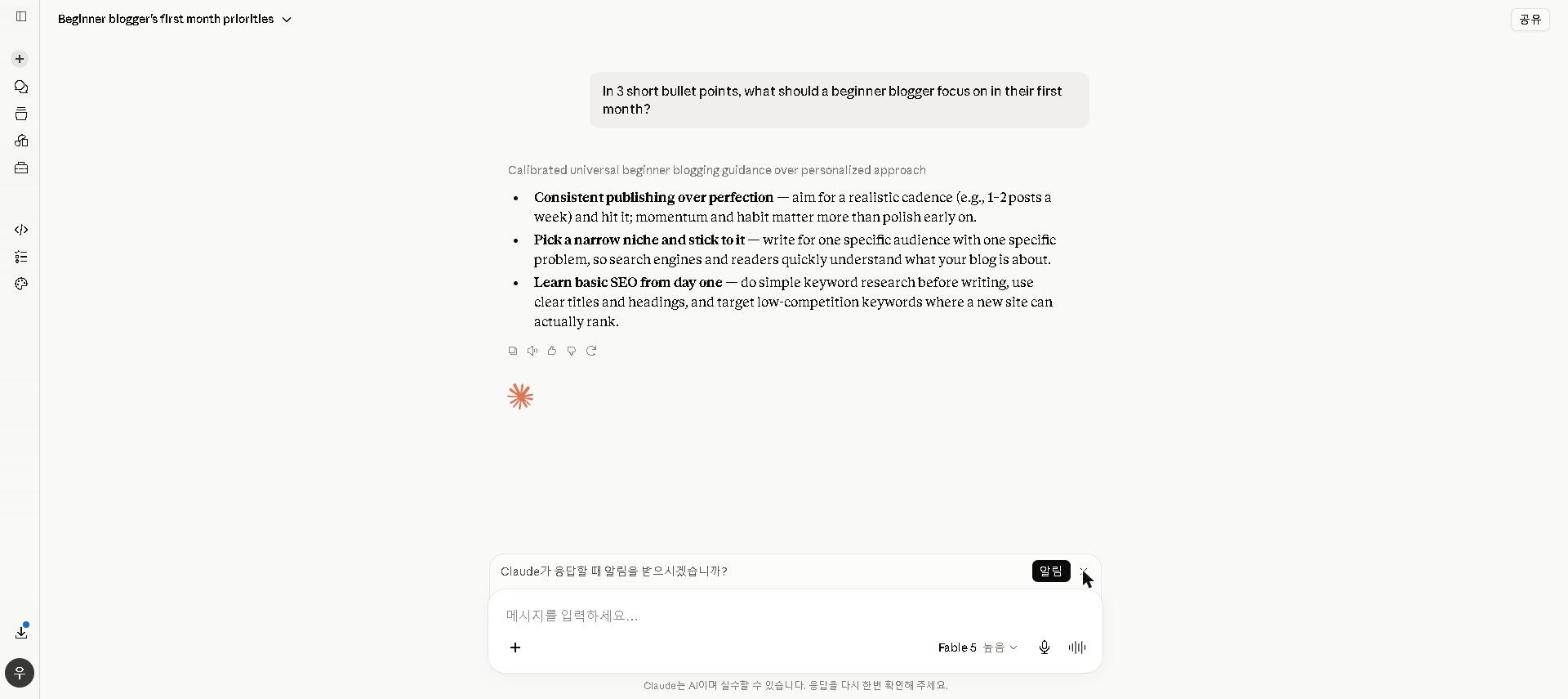
Claude produces the most natural, well-structured essay writing of the AI tools we use. Its large context window means it can maintain a consistent argument across a long essay without losing the thread — something shorter-context tools struggle with.
For a full breakdown of Claude’s capabilities, check out our Claude AI Review 2026.
Best for: Research papers, argumentative essays, and any essay over 1,000 words.
2. ChatGPT — Best for Brainstorming and Outlines
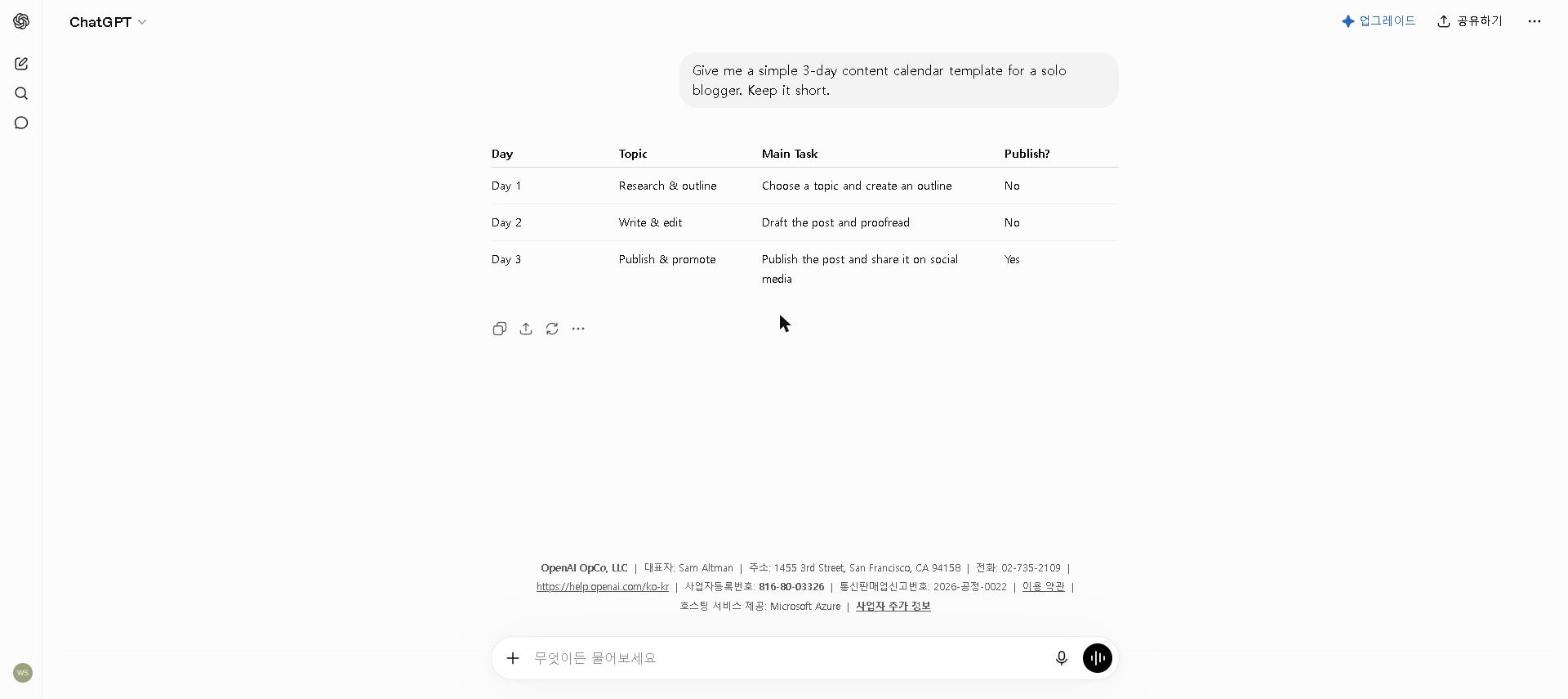
ChatGPT is the most versatile tool for the early stages of essay writing. Use it to generate essay angles, build outlines, and explore arguments before you start writing.
For tips on getting the most out of ChatGPT’s free plan, see our How to Use ChatGPT for Free in 2026 guide.
Best for: Brainstorming, outlining, and overcoming writer’s block.
3. Grammarly — Best for Editing and Proofreading
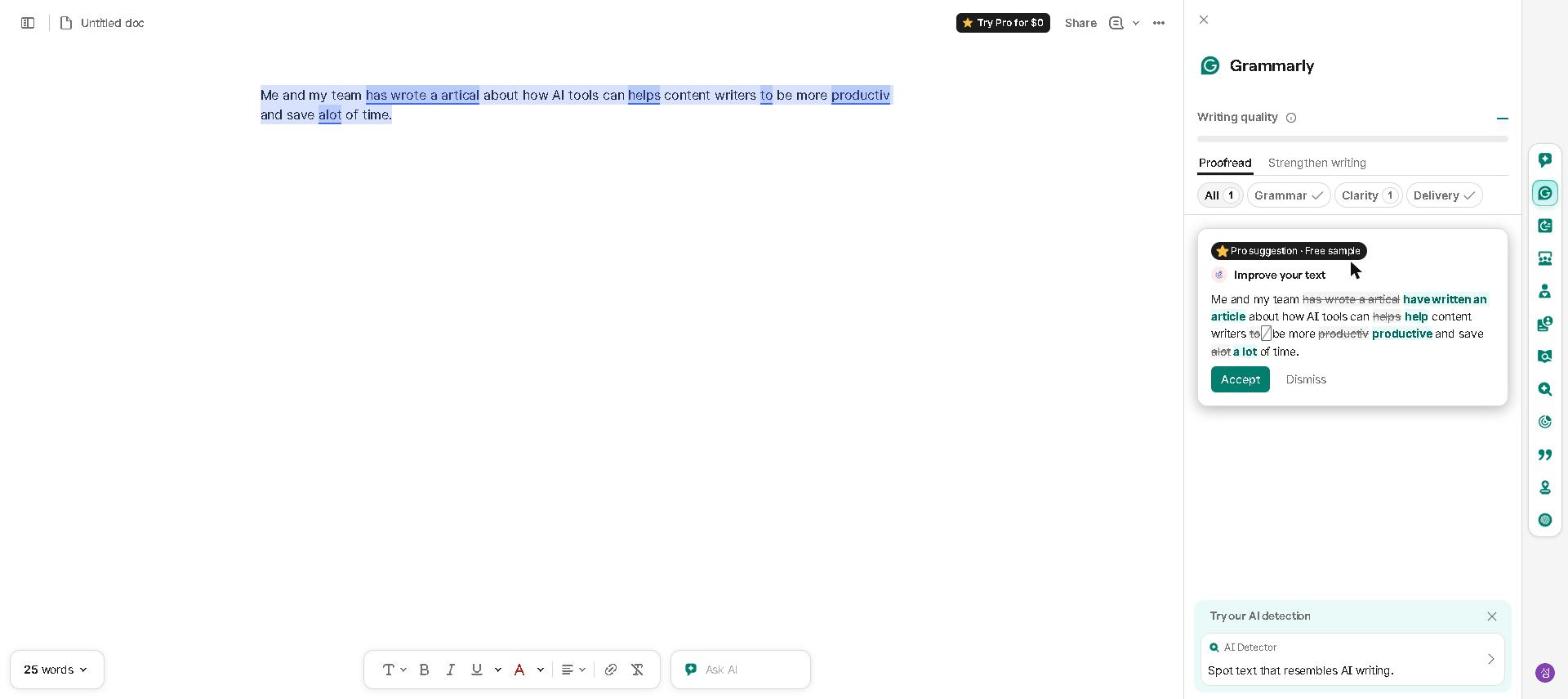
Grammarly works directly inside Google Docs, catching grammar errors and suggesting improvements as you write. Its tone detection is particularly useful for academic writing — ensuring your essay reads as appropriately formal and confident.
For a full breakdown of Grammarly’s features, check out our Grammarly Review 2026.
Best for: Editing, proofreading, and improving clarity.
4. Perplexity AI — Best for Research
Perplexity AI searches the web in real time and provides cited sources for every answer — making it the most reliable AI tool for finding and verifying information for your essay.
For a full breakdown of Perplexity AI’s features, check out our Perplexity AI Review 2026.
Best for: Research, fact-checking, and finding academic sources.
For a broader look at free AI tools for students, check out our Best Free AI Tools for Students in 2026 guide.
Step-by-Step: How to Use AI to Write a Better Essay
Step 1: Choose Your Topic and Angle
Start by asking ChatGPT or Claude to help you explore different angles on your essay topic.
Example prompt:
I need to write a 1,500-word argumentative essay about the impact of social media on mental health. Give me 5 different angles I could take, with a brief explanation of each.
Choose the angle that interests you most and that you can argue convincingly.
Step 2: Build Your Outline
Once you have your angle, ask AI to help you build a structured outline.
Example prompt:
I’m writing an argumentative essay arguing that social media has a net negative impact on teenage mental health. Create a detailed outline with an introduction, three main arguments with supporting points, counterarguments, and a conclusion.
Review the outline carefully — adjust any points that don’t fit your argument or that you can’t support with evidence.
Step 3: Research Your Arguments
Use Perplexity AI to find evidence and sources for each of your main arguments.
Example prompt:
Find recent academic research or statistics on the link between social media use and depression in teenagers. Include citations.
Always verify the sources Perplexity provides before using them in your essay.
Step 4: Draft Each Section
With your outline and research ready, use Claude to help draft each section.
Example prompt:
Write the introduction for an argumentative essay about social media’s negative impact on teenage mental health. The thesis is: While social media offers genuine social benefits, its net effect on teenage mental health is negative due to increased anxiety, social comparison, and disrupted sleep patterns. Keep it around 150 words and make it engaging.
Use the AI draft as a starting point — always rewrite it in your own voice before submitting.
Step 5: Edit and Polish
Once you have a complete draft, run it through Grammarly for grammar and clarity improvements. Then ask Claude or ChatGPT to review the overall argument.
Example prompt:
Review this essay for logical consistency, strength of argument, and clarity. Suggest specific improvements without rewriting the whole thing.
Step 6: Check for AI Detection (Important)
Many universities now use AI detection tools like Turnitin and GPTZero. After using AI assistance, make sure to:
- Rewrite AI-generated sections in your own voice
- Add your own analysis and personal insights
- Vary sentence structure and length
- Remove any phrases that sound generic or robotic
Is Using AI for Essays Cheating?
This is the most important question — and the answer depends entirely on how you use it.
Using AI as a thinking partner is not cheating. Using AI to brainstorm ideas, understand concepts, find research, or improve your writing is no different from using a dictionary, a writing center tutor, or a study group.
Submitting AI-generated text as your own is cheating. If you paste an AI response directly into your essay without understanding or meaningfully editing it, you’re misrepresenting your own work — regardless of whether your university’s policy explicitly mentions AI.
Always check your institution’s policy. Universities are still developing their AI policies, and they vary significantly. Some prohibit any AI use; others actively encourage it for certain tasks. Know your institution’s rules before using any AI assistance.
Our recommendation: Use AI as a scaffold, not a shortcut. The students who benefit most from AI tools are the ones who use them to think more clearly, research more efficiently, and write more effectively — not the ones who use them to avoid the work entirely.
How to Avoid AI Detection in Your Essays
Rewrite in your own voice. Never submit AI-generated text verbatim. Read the output, understand it, then rewrite it in your own words — the ideas can come from AI, but the expression should be yours.
Add your own analysis and opinions. AI can generate arguments and structure — but your personal insights, real-world examples, and original opinions are what make an essay genuinely yours. Graders can tell the difference between a student who understands the topic and one who doesn’t.
Vary your sentence structure. AI tends to produce uniform sentence lengths and patterns. Mix short punchy sentences with longer ones to sound more natural and human.
Cite your own sources. Always find and verify your own references rather than relying on AI-suggested citations. AI tools can sometimes hallucinate sources that don’t exist — which is a serious academic integrity issue.
Use AI early, not late. The safest approach is to use AI for brainstorming and outlining — the early stages where ideas are forming — and rely on your own writing for the actual draft.
The golden rule: use AI to think more clearly and write more efficiently — not to replace your own thinking entirely.
Who This Is NOT For
Skip AI essay writing tools if you:
- Attend an institution that prohibits AI use entirely — always check your institution’s policy first
- Want to submit AI-generated work without editing or understanding it — this crosses into academic dishonesty
- Are writing a highly personal reflective essay — AI can’t replicate genuine personal experience
- Are just starting to develop your academic writing skills — build your own voice before using AI to accelerate it
Best AI Essay Writing Tools by Use Case
- Best AI tool for essay brainstorming: ChatGPT
- Best AI tool for essay outlines: Claude or ChatGPT
- Best AI tool for essay research: Perplexity AI
- Best AI tool for essay drafting: Claude
- Best AI tool for essay editing: Grammarly
- Best free AI tool for essays: ChatGPT or Claude
Final Thoughts
AI has fundamentally changed what’s possible in essay writing — but the students who benefit most are the ones who use it thoughtfully. Use AI to work smarter, research faster, and write more clearly — then make the ideas your own.
Start with ChatGPT for brainstorming, Perplexity AI for research, Claude for drafting, and Grammarly for editing. Together, they cover every stage of the essay writing process — and most of it is completely free.
Have you used AI to help with your essays? Share your experience in the comments below!
Last updated: September 2026
Written by Ian Sung — IT professional working in automation, scripting and workflow tooling. ChatGPT, Claude and Google Gemini are part of my daily work; every other tool covered here is assessed from a free-plan check, official documentation and verified user reviews, and each review says which applies.
Pingback: Stop Wasting Time: Best AI Tools for Student Productivity in 2026 | AI Tool Spot
Pingback: Jasper AI Review 2026: Is It Worth It? (Honest Review) | AI Tool Spot
Pingback: Best AI Tools for Students on a Budget (2026 Guide) | AI Tool Spot
Pingback: How to Use AI to Study for Exams in 2026 (Student Guide) | AI Tool Spot